


What are MCP Events? Event triggers for Claude Code
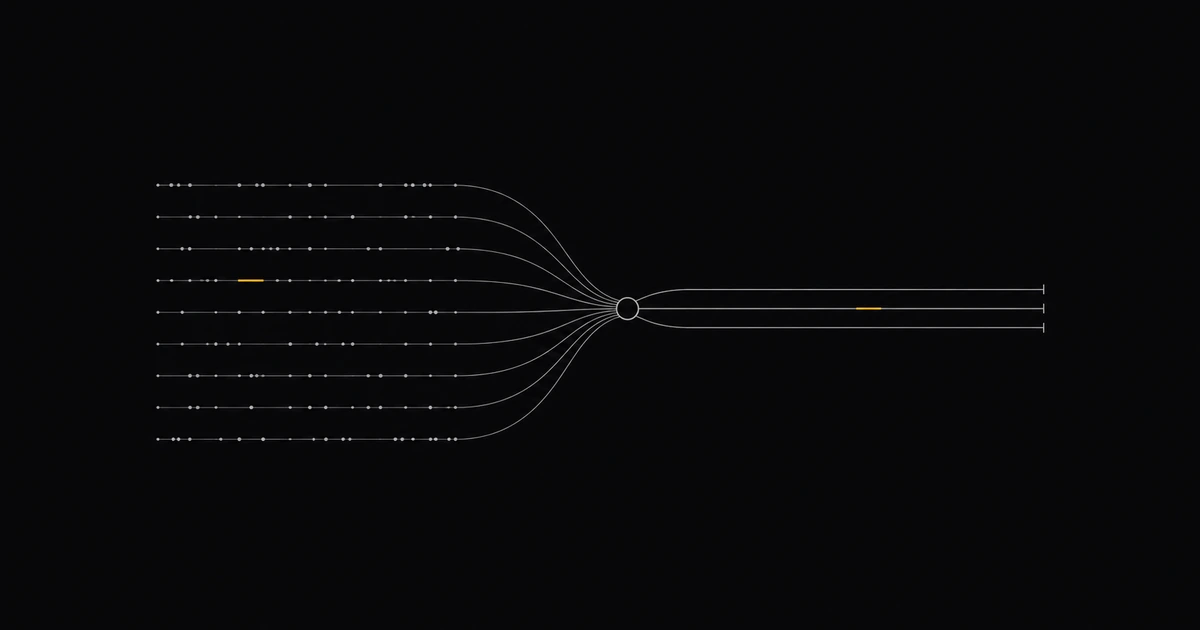
MCP started as a pull-only protocol: a user or model asks a server for a tool call or resource, and the server answers. That works when someone is sitting in a chat window. It breaks down as soon as you want an agent to react to a Linear assignment, a failed CI run, a Sentry error, or an inbound email while nobody is at the keyboard.
In November 2026, SEP-3415 reached Final status, defining the official MCP Events extension (io.modelcontextprotocol/events). The extension specification is published in Beta by the Tasks and Events Working Group and requires MCP protocol revision 2026-07-28 or later.
Here is what MCP Events actually specifies, where client support stands today, and how to wire real upstream events into Claude Code now without waiting for every client to implement the spec.
Why MCP needed an Events extension
Core MCP already had notifications such as notifications/resources/updated and the list_changed family. As the MCP Events overview explains, those primitives cannot carry general upstream triggers for three reasons:
- No parameters or payload. Resource notifications only say that a URI changed. They cannot express a filtered subscription like "P1 incidents for service X" or deliver a typed event payload.
- Live connection required. Core notifications only arrive over an open
subscriptions/listenstream. If the client disconnects, events vanish. - No resumption. There is no cursor, so a client that reconnects after a restart or laptop sleep cannot replay what it missed or even tell that a gap occurred.
Teams running unattended coding agents also live in incompatible network topologies. A serverless MCP server cannot hold an open TCP stream per subscriber. A developer laptop behind NAT cannot expose a public HTTPS callback URL. And a cost-sensitive client should not spin up LLM turns on a cron schedule to check whether anything changed. SEP-3415 addresses all three by defining a single event model over three delivery modes.
How MCP Events work under SEP-3415
MCP Events is an opt-in extension negotiated through standard MCP extension capabilities. Both sides keep normal core protocol behavior when the other side does not support it; an unsupported server simply responds to events/* calls with -32601 (Method not found).
The lifecycle runs in six steps:
- Capability negotiation. The server advertises
io.modelcontextprotocol/eventsin itsserver/discovercapabilities (with optionallistChanged: trueif it sendsnotifications/events/list_changed). The client may declare the same identifier inside per-request_meta["io.modelcontextprotocol/clientCapabilities"]. - Discovery (`events/list`). The client calls
events/list. Each event type returns aname, a human-readabledescription, aninputSchemafor subscription arguments (filters or transforms), apayloadSchemafor delivered event data, and adeliveryarray listing supported modes. - Subscription. The client subscribes with
(name, arguments)using one of the advertised delivery modes. Passingcursor: null(or omittingcursor) means "start from now" without replaying history. - Delivery. Each event arrives as an
EventOccurrenceobject:{ eventId, name, timestamp, data, cursor }. The client stores the opaque servercursorand deduplicates retries or reconnect overlaps usingeventIdscoped to that subscription. - Resumption and gap detection. After a disconnect or restart, the client resubscribes with its persisted
cursorand an optionalmaxAgeMsfloor (for example, replaying at most the last 5 minutes after a week offline). If the server had to skip events because the cursor fell outside upstream retention or pastmaxAgeMs, it returnstruncated: truealongside a fresh cursor so the client knows to reconcile state with tools. - Reaction. The client SDK hands the event occurrence to the agent runtime, which decides whether to start a new turn, inject context, or apply policy checks.
Here is what an events/list descriptor and an events/poll response look like in SEP-3415:
{
  "resultType": "complete",
  "events": [
    {
      "name": "incident.created",
      "description": "Fires when a new PagerDuty incident is created",
      "delivery": ["webhook", "push", "poll"],
      "inputSchema": {
        "type": "object",
        "properties": {
          "severity": { "type": "string", "enum": ["P1", "P2", "P3", "P4"] },
          "service": { "type": "string" }
        }
      },
      "payloadSchema": {
        "type": "object",
        "properties": {
          "incidentId": { "type": "string" },
          "title": { "type": "string" },
          "severity": { "type": "string" }
        }
      }
    }
  ]
}
{
"resultType": "complete",
"events": [
{
"eventId": "evt_001",
"name": "email.received",
"timestamp": "2026-02-19T15:30:00Z",
"data": {
"messageId": "msg_xyz",
"from": "ops@example.com",
"subject": "Production alert: checkout 502s",
"receivedAt": "2026-02-19T15:29:58Z"
}
}
],
"cursor": "historyId_99842",
"truncated": false,
"hasMore": false,
"nextPollMs": 30000
}One detail worth noting: the client owns the canonical list of subscriptions across all three modes. There is no server-side method to list active subscriptions. A client can always rebuild server state by resuming its poll loop, reopening its push stream, or sending an idempotent events/subscribe call with its stored cursor.
The three delivery modes: poll, push, and webhook
None of the three delivery modes is mandatory. Each event type advertises any non-empty subset of "poll", "push", and "webhook", and the client SDK intersects that list with what the client can support. By default, SDKs prefer webhook first, then push, then poll.
| Mode | Method | How it works | Best fit |
|---|---|---|---|
| Poll | events/poll | Client SDK requests new events at nextPollMs. First call with cursor: null bootstraps the cursor. Server holds no protocol-required state. | Serverless or stateless MCP servers, clients behind NAT |
| Push | events/stream | Client opens one long-lived request per subscription over Streamable HTTP (SSE) or stdio. Server pushes notifications/events/event and periodic notifications/events/heartbeat frames with updated cursors. | Local stdio servers, always-connected clients |
| Webhook | events/subscribe / events/unsubscribe | Authenticated client registers an https:// callback URL and a client-supplied whsec_ signing secret under a renewable TTL (refreshBefore). Server verifies the endpoint and POSTs Standard Webhooks signed events. | Remote MCP servers, cloud agent runtimes, forward proxies |
Protocol-level events/poll is easy to confuse with cron-scheduled LLM polling, and the distinction matters for cost. In events/poll, the client SDK polls the MCP server directly; when events comes back empty, no model is called and zero tokens are spent. We break down the tradeoffs across all three modes, raw product webhooks, and Claude Code channels in MCP Events vs webhooks vs polling (and Claude Code channels).
Who supports MCP Events right now?
This is the current bottleneck. SEP-3415 only reached Final in November 2026, and it builds on protocol revision 2026-07-28, which introduced per-request client capabilities, server/discover, and subscriptions/listen.
As of late November 2026, the official MCP Extension Support Matrix shows how early client adoption still is:
- Partial support: ChatGPT (webhook only) and OpenCode (push only). The matrix notes that most existing implementations predate SEP-3415 reaching Final and track earlier draft specs.
- No native SEP-3415 support listed yet: Claude (web), Claude Desktop, Claude Code, Cursor, VS Code GitHub Copilot, and Codex.
- Reference SDK and conformance work: Full server and client support for all three modes is in review on the official TypeScript SDK (
typescript-sdk#3209underext/eventssubpaths), alongside the Pythonmcp-webhook-eventsserver package and the SEP-3415 conformance test suites. The working group's incubation history also lives in modelcontextprotocol/experimental-ext-triggers-events.
For teams running Claude Code or Codex today, waiting on native client-side SEP-3415 support means either writing brittle custom webhook glue or burning usage on scheduled polling loops.
How Cyrus routes events and context into Claude Code today
Events and triggers are how upstream context gets routed to the right agent. Cyrus operates as a context router — a switchboard for agent context with guardrails and low latency — bridging upstream event systems directly into Claude Code today so engineering teams can move at the speed of data rather than waiting on manual copy-paste or cron loops.
Instead of polling your issue tracker or chat channels on a timer, Cyrus runs dedicated event transports and verified webhooks for the tools teams already work in, routing each event to the matching repository, isolated Git worktree, or live session:
- Linear: Issue assignments, comment mentions, and label-based routing automatically start an isolated Git worktree session or wake the existing session for that ticket. See our Linear + Claude Code guide and Linear integration docs.
- GitHub and GitLab: Pull request mentions, review requests, change-request comments, failing CI checks, and merge-conflict follow-through route straight back to the session that opened the PR. See Instant PR reviews and our GitHub integration docs.
- Slack:
@cyrusthread mentions bring the thread context and connected repositories into a session without copying context into a terminal. See our Slack integration docs. - Sentry, email, and custom workflows: Sentry alerts can create and assign Linear issues directly to Cyrus for root-cause investigation and a draft PR — covered step by step in our Sentry + Linear AI bug fixes guide. External webhook and email pipelines can trigger Cyrus through the same event path.
- Claude Code channels: Cyrus supports Claude Code channels, so teams can deliver live events from Linear, GitHub, Slack, Telegram, Discord, and webhooks into an open Claude Code session as well as running unattended background sessions.
Because event payloads come from external systems, every trigger path also needs guardrails. Cyrus runs each background task in an isolated Git worktree, restricts capabilities via configurable allowed tools, leaves merging to a human reviewer, and has completed an independent SOC 2 Type II audit. For the security rules around untrusted event data in both MCP Events and current trigger pipelines, read MCP event payloads are untrusted: a practical security guide.
If your team is currently paying for hourly scheduled agent checks to watch Linear, GitHub, or Slack, see Stop burning usage: replace scheduled agent checks with event triggers for a trigger-audit prompt you can run today.
Frequently asked questions
What MCP protocol version do MCP Events require?
MCP Events (io.modelcontextprotocol/events) requires MCP protocol revision 2026-07-28 or later. It depends on per-request client capabilities, server/discover, and subscriptions/listen, which are not present in 2025-11-25 or earlier revisions.
Does Claude Code support MCP Events natively?
Not yet. As of late November 2026, Claude Code is not listed with native SEP-3415 support in the MCP Extension Support Matrix. Claude Code does support its own experimental stdio channels (claude/channel) and cloud scheduled tasks with GitHub and API triggers, and Cyrus bridges Linear, GitHub, Slack, Sentry, and webhook events into both background Claude Code sessions and Claude Code channels today.
How are MCP Events different from MCP Tasks?
MCP Tasks track long-running operations that the client itself started. MCP Events subscribe to upstream activity that happens independently of the client — such as an inbound email, a repository push, a Linear issue assignment, or a production incident — so an unattended agent can react when it occurs.
Does MCP Events guarantee exactly-once delivery?
No. When backed by a durable upstream and persisted client cursors, MCP Events provides at-least-once delivery across poll, push, and webhook modes. Clients achieve effectively-once processing at the application layer by deduplicating on eventId within each subscription (and on webhook-id for HTTP webhook retries). Emit-only event types that return cursor: null cannot replay missed events after a disconnect or server restart.
Why does SEP-3415 include a polling mode if the goal is event-driven agents?
Because stateless and serverless MCP servers cannot hold long-lived push streams, and clients behind NAT cannot receive inbound webhooks without a proxy. Protocol-level events/poll is executed by the client SDK — not the LLM — so empty polls consume zero model tokens while preserving resumable cursors and server-controlled nextPollMs backoff.

Break free from the terminal
As your Claude Code powered Linear agent, Cyrus is capable of accomplishing whatever large or small issues you throw at it. Get PMs, designers and the CEO shipping product.