


MCP Events vs webhooks vs polling (and Claude Code channels)
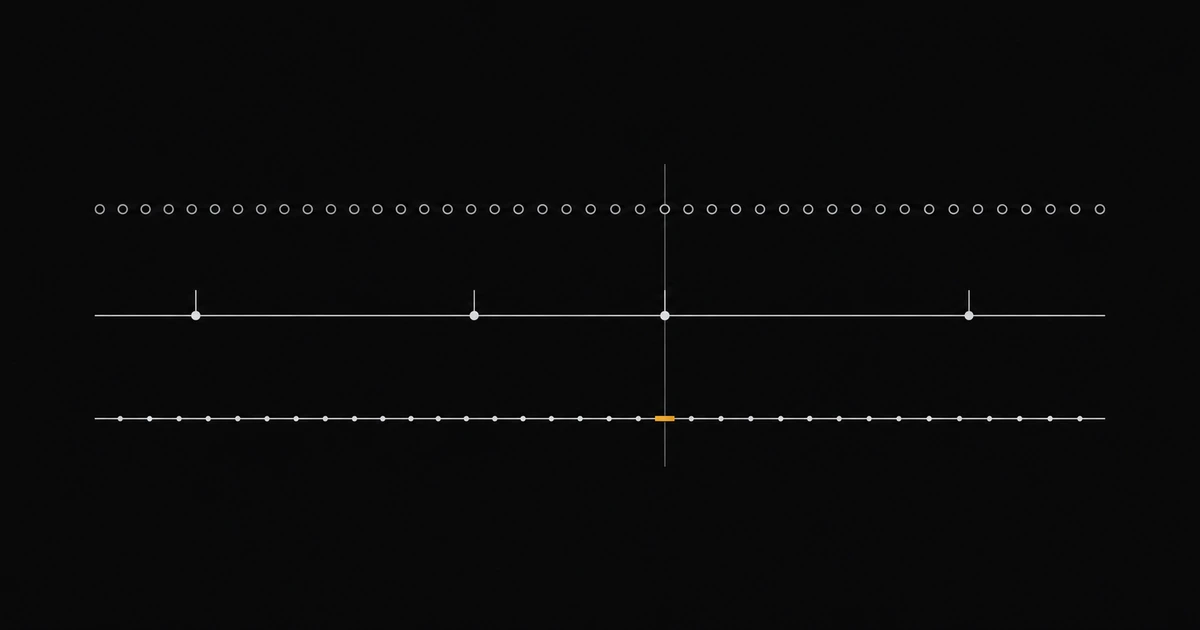
If you want an AI coding agent to react when a Linear ticket is assigned, a GitHub PR fails CI, or a Sentry error fires, you now have four different mechanisms competing for your architecture: scheduled LLM polling, raw HTTP webhooks, Claude Code channels, and the finalized MCP Events extension (io.modelcontextprotocol/events).
They are not interchangeable. Each one makes a different bet on network topology, server state, token cost, and client support. Pick the wrong one and you either burn through your usage cap on empty checks, miss events whenever your laptop sleeps, or spend a week maintaining custom webhook relays.
Decision table: MCP Events vs webhooks vs polling vs Claude Code channels
| Mechanism | Latency | Works behind NAT? | Server state | Resumption / cursors | Auth & signing | LLM tokens when idle | Best fit |
|---|---|---|---|---|---|---|---|
| Scheduled LLM polling (cron routines) | Minutes to hours | Yes | None | Manual (in prompt/DB) | Standard tool/MCP auth | High (full turn every run) | Time-bound digests only (weekly docs drift, daily summary) |
| MCP Events: `events/poll` | Seconds to minutes (nextPollMs) | Yes | Stateless (optional ephemeral lease) | Opaque cursor, maxAgeMs, truncated | Same MCP principal as tools | Zero (SDK polls; LLM wakes only on events) | Serverless MCP servers, local clients behind NAT |
| MCP Events: `events/stream` | Sub-second to seconds | Yes (client opens stream) | Per-connection stream | Opaque cursor + heartbeat cursor | Same MCP principal as tools | Zero while idle | Local stdio MCP servers, always-connected HTTP/2 clients |
| MCP Events: `events/subscribe` (webhook) | Sub-second | Only via forward proxy | TTL-scoped (in-memory or durable) | Watermark cursor + gap envelope | Required principal + Standard Webhooks whsec_ HMAC | Zero while idle | Remote MCP servers, cloud agent platforms, multi-tenant gateways |
| Raw product webhooks (Linear, GitHub, Slack, Stripe) | Sub-second | Only via tunnel or relay | Vendor-managed | Vendor-specific (usually retry window only) | Vendor-specific HMAC/secrets | Zero while idle | Direct platform-to-backend triggers when you own the receiver |
Claude Code channels (claude/channel) | Sub-second (into open session) | Yes (for local stdio / outbound pollers) | Local subprocess per session | None; missed events while closed are lost | Sender allowlists + --channels opt-in | Zero while idle | Interactive push into an already-running local Claude Code session |
For the full SEP-3415 protocol walkthrough behind the three MCP Events rows, see What are MCP Events?.
Scheduled LLM polling vs MCP events/poll: stop conflating the two
Most "stop polling" advice on X is aimed at scheduled LLM routines — waking an agent every 15 or 60 minutes so the model loads its prompt, calls list_issues or check_calendar, discovers nothing changed, and exits. That pattern burns tokens linearly with time, regardless of how much real work exists. We break down the cost math and migration steps across Claude Code routines, Cursor Automations, and Grok Bot in Stop burning usage: replace scheduled agent checks with event triggers.
MCP Events' events/poll looks superficially similar on a diagram, because the client asks the server for updates on an interval. Under the hood, it works very differently:
- The client SDK runs the loop, not the model. An empty
events: []response never invokes the LLM. - The server controls backoff. Each response returns
nextPollMs, letting the server slow down when rate-limited upstream or drain a backlog immediately whenhasMore: true. - Resumption is built in. The server returns an opaque
cursor(for example a GmailhistoryIdor Kafka offset) even on empty polls so quiet periods never expire the client's position.
In short: stop scheduling LLM turns to poll MCP tools. Do not confuse that with protocol-level events/poll, which exists specifically so stateless servers and NAT-bound clients can get zero-token idle watching without maintaining persistent sockets or public webhook endpoints.
Raw product webhooks vs MCP Events (events/subscribe)
A common question from backend engineers reading SEP-3415: "GitHub, Linear, and Stripe already have webhooks. Why do we need MCP Events at all?"
Appendix B of SEP-3415 lays out why these are two separate hops:
- Hop 1 (Upstream → MCP Server): GitHub, Linear, or Sentry sends its native product webhook — with its own payload format, its own signature header, and its own dashboard registration — to an MCP server or event router.
- Hop 2 (MCP Server → Agent Client): The agent client discovers available event types via
events/list, validates filter arguments againstinputSchema, and subscribes viaevents/subscribeusing a single standard contract across every service.
Raw product webhooks force every agent host to hand-code verification, retry handling, payload schemas, and secret rotation for every upstream vendor. MCP Events' webhook mode standardizes Hop 2 around:
- Schema discovery and typed filtering via
events/list,inputSchema, andpayloadSchema. - Standard Webhooks HMAC signing (
webhook-id,webhook-timestamp,webhook-signaturewith client-suppliedwhsec_secrets) plus optional Ed25519 asymmetric signing (v1a,). - Mandatory endpoint verification (challenge handshake, allowlist, or
/.well-known/mcp-webhook-receiver.json) and delivery-time SSRF protection. - Self-cleaning TTLs (
ttlMssuggested by the client,refreshBeforegranted by the server) so crashed clients do not leave orphaned webhook registrations behind forever.
When you only need one integration — say, posting a GitHub event to a single internal HTTP endpoint you control — a raw webhook is simpler today. When an agent runtime needs to subscribe dynamically to dozens of upstream tools without writing bespoke glue per vendor, MCP Events is the standard interface that raw webhooks never provided.
Claude Code channels vs MCP Events
Developers using Claude Code often ask whether Claude Code channels already are MCP Events. They are not.
Claude Code channels shipped in March 2026 as an experimental Claude-Code-specific MCP convention: a local stdio server declares capabilities.experimental['claude/channel'] and emits notifications/claude/channel with { content, meta }. Claude Code injects that text into the active terminal session inside a <channel> tag.
That makes channels fast and ergonomic for two-way chat bridges (Telegram, Discord, Slack) and local alerts when you already have a session open. It also leaves clear protocol gaps compared to SEP-3415:
- Session-bound lifetime. Channels only deliver while a Claude Code session is actively running. Close the laptop or restart the terminal and inbound events are gone.
- No delivery acknowledgments or cursors. As Claude Code's channel docs note,
mcp.notification()resolves when written to stdout, not when Claude processes it — if the session did not load the channel or org policy blocked it, events drop silently with no cursor to replay from. - No remote webhook delivery mode. Every custom channel is a local
stdiosubprocess; receiving remote HTTP webhooks requires either a tunnel, an external queue/relay, or a hosted bridge. - Allowlist friction for custom servers. Third-party custom channel servers outside Anthropic's allowlist normally require launching Claude Code with
--dangerously-load-development-channels.
MCP Events fixes the protocol layer — adding discovery, poll/push/webhook modes, cursors, gap signaling, and signed callbacks — but as of late November 2026, Claude Code and Codex do not natively implement final SEP-3415 yet.
How to choose right now
Use your deployment topology and whether a human terminal stays open to decide — and remember that once you connect more than one upstream source, the real layer you are building is a context router: a low-latency switchboard with guardrails that routes each event to the right agent and repository without leaking permissions or burning idle tokens.
- You want an agent to work while laptops are closed (issues, PRs, Sentry errors, Slack mentions). Do not rely on a local
stdiochannel alone, and do not burn usage on hourly scheduled routines. Use verified webhook triggers feeding a context router that spins up isolated background sessions — this is how Cyrus routes Linear, GitHub, GitLab, Slack, and Sentry today, keeping each ticket in its own Git worktree and routing review feedback back to the same session so your team moves at the speed of data. - You want live push into a running Claude Code session from Slack, GitHub, Linear, Telegram, or Discord. Use Claude Code channels. Cyrus supports Claude Code channels, so the same context router can deliver live events into an interactive session alongside unattended background runs.
- You are building a new MCP server in late 2026 or 2027. Implement
io.modelcontextprotocol/events(SEP-3415) on protocol revision2026-07-28. Offerevents/pollat minimum if your server is stateless or serverless, addevents/streamfor localstdioand low-latency HTTP clients, and addevents/subscribewhen your server can do outbound HTTPS with SSRF hardening and Standard Webhooks signing. - You only need a periodic summary or batch audit. Keep a low-frequency schedule (daily or weekly). Schedules are fine for time-bound reporting; they are the wrong tool for watching event queues.
Whichever trigger path you pick, treat every inbound payload as untrusted input. Our MCP event payloads security guide covers prompt injection framing, minimal payloads, authorization checkpoints, and webhook SSRF hardening.
Frequently asked questions
Are MCP Events replacing webhooks?
No. Upstream SaaS products like GitHub, Linear, and Sentry still emit their native webhooks to an MCP server or gateway. MCP Events standardizes the next hop — how an MCP server advertises event types, validates filter arguments, and delivers signed, resumable events to any compliant MCP client via poll, push, or webhook.
When should I use events/poll instead of events/subscribe?
Use events/poll when the MCP server is serverless or stateless (cannot store subscriptions or run background outbound POSTs) or when the client runs behind NAT without a public HTTPS callback proxy. Use events/subscribe when you have a remote MCP server and a reachable webhook receiver or forward proxy and want sub-second delivery without holding open connections.
Can Claude Code channels work with Slack, GitHub, Telegram, and Discord?
Yes. Telegram and Discord shipped in Anthropic's official research preview plugins, and custom or bridged channel servers can forward Slack, GitHub, and webhook events into a running Claude Code session. With Cyrus, you can connect Linear, GitHub, Slack, Telegram, Discord, and webhook triggers into Claude Code channels, or run them as isolated background worktree sessions when no terminal is open.
Does events/poll waste LLM tokens like scheduled agent routines?
No. In SEP-3415, events/poll is a protocol-level request made by the client SDK. Empty poll responses return events: [] and a nextPollMs backoff hint without invoking the model. Scheduled LLM routines waste tokens because they start a model turn on every tick even when nothing changed upstream.

Break free from the terminal
As your Claude Code powered Linear agent, Cyrus is capable of accomplishing whatever large or small issues you throw at it. Get PMs, designers and the CEO shipping product.